Before You Use Claude Code: Build This First
Everyone's rushing to Claude Code. They're skipping Step 0

Everyone’s asking me the same question right now: “Where do I start with Claude Code?”
Here’s the answer: Not with Claude Code.
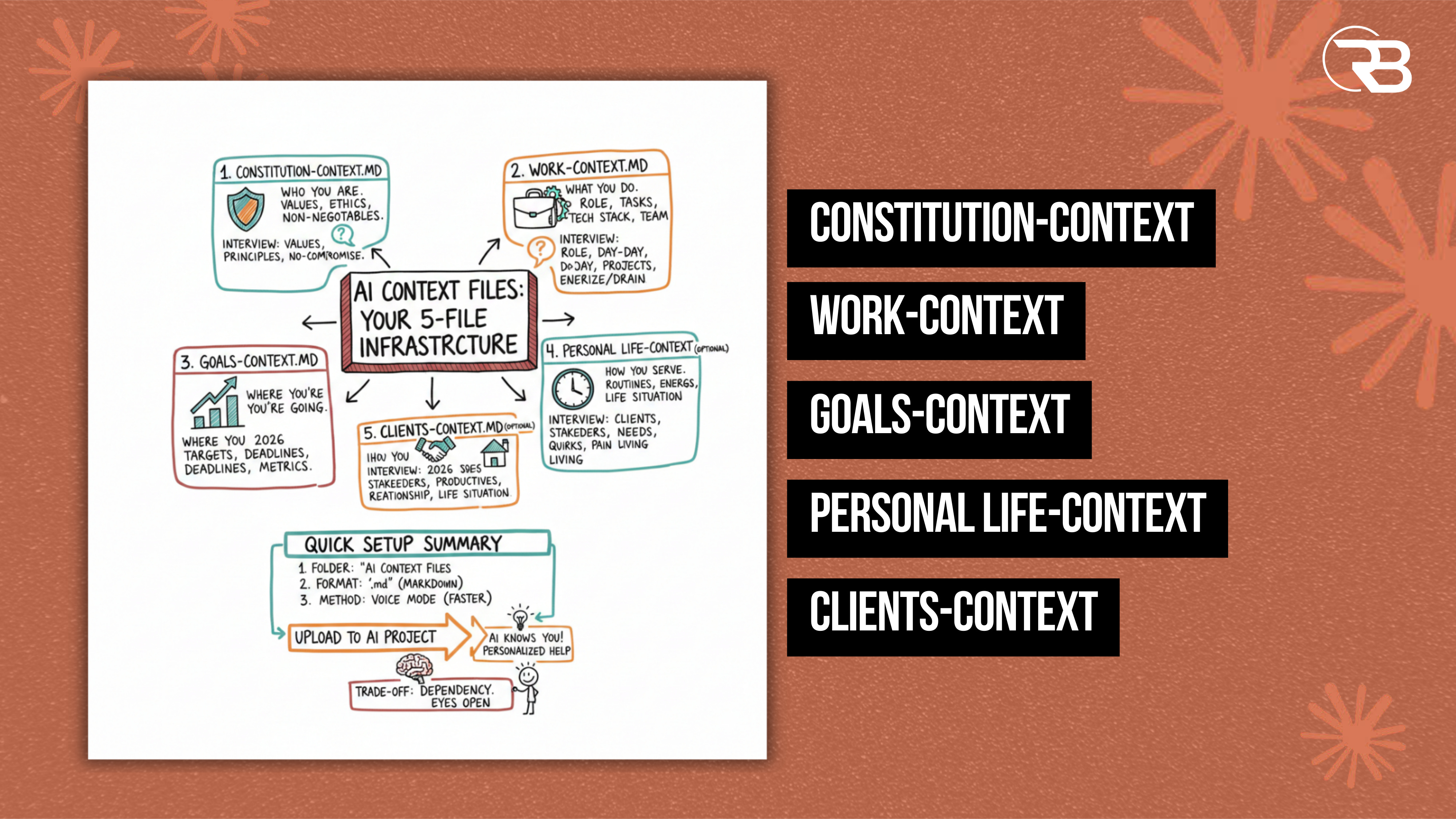
Start here. Ground zero. Five simple files that teach AI who you are.
I know. You want to dive straight into the demos. AI that codes for hours. Builds entire projects autonomously. Works while you’re at the gym. I get it.
But here’s what happens when you skip this step:
You open Claude Code. It asks: “What are we building? For who? What’s your style?” You type it all out. Claude builds something. It’s fine. Generic. Not quite right. Next session: “What are we building? For who? What’s…” You’re typing the same context into every session. Forever.
This is what you build first.
Five text files. 2-3 hours to build. Then Claude Code (and every other AI tool) actually knows you.
This is ground zero. Build these files first. Then build everything else.
Full Disclosure
I am NOT a techie or a coder. Full stop. I spent weeks fumbling through this. Googled “what even is a markdown file.” Rebuilt these files four times because I kept overthinking them.
This is the VERY basic guide I wish someone had given me six months ago. The one that just tells you what to do. No assumptions. No tech-speak.
If you’re technical, this might feel insultingly simple.
If you’re not? Hi. Welcome. I made this for us.
Five Simple Files
Yup. That’s it. Five simple files. Not code. Not technical. Just text files about you. Build them once (2-3 hours). Use them forever. With any AI. Including Claude Code.
The 5 files:
Your Values: What matters to you, what you won’t compromise on
Your Work: What you do, what’s working, what’s not
Your Goals: What you’re trying to accomplish this year
Your Life: How you work, what energizes you, what drains you
Your Clients: (optional) - Who you serve, what they need
Time to build: 2-3 hours (use voice, not typing - I’ll show you)
Time saved: 5+ hours every week after that
Technical skills needed: Zero
(Yes, you’re creating detailed psychological profiles of yourself for corporate AI. Yes, it makes everything work better. Both things are true).
Where You’ll Use These Files (hint: not just in Claude Code)
Regular ChatGPT, Gemini, or Claude conversations (upload at the start)
ChatGPT Projects or Claude Projects (upload once, use forever)
Claude Code (if you ever want to try building things with AI)
Any AI tool that accepts file uploads
Future AI tools that don’t exist yet
Build once. Use everywhere. Let’s get you started.
The .md File Thing (Do You Even Need to Know This?)
Short answer: No. Claude can create these files for you automatically. You just download them.
If you already know what .md files are, skip this section. This is for people like me who Googled “what is .md file” seventeen times and still didn’t really get it until I just...did it.
The TL;DR: A .md file = a text file with ".md" at the end.
That's the entire technical complexity.
Why .md specifically? Three reasons, and they're all kind of boring but they matter.
First, structure. A .md file can have headers and lists and formatting that AI actually understands and processes it better.
Second, AI was literally trained on markdown. So when AI reads a .md file, it's reading its native language. Like showing up to a French restaurant and discovering the waiter actually speaks French.
Third, portability. .docx files have all this proprietary Microsoft formatting nonsense. .txt files have no structure at all. .md is the sweet spot: lightweight, works everywhere, preserves meaning.
If you ever need to edit a .md file manually, just open it in any text editor (Notepad on Windows, TextEdit on Mac), make your changes, save. That's it. You don't need to learn Markdown syntax or formatting rules. Just type like you're texting and save the file with ".md" at the end instead of ".txt" Claude handles all of this for you anyway.
I'm just telling you so you're not Googling "what is .md file" seventeen times like I did.
How to Build These Context Files
Step 1: Make a folder
Create one folder on your desktop.
Right-click on your Desktop
New Folder → Name it: AI Context Files
Your desktop now has:
Desktop/
└── AI Context Files/
Done. All five files will live here.
Step 2: Choose your method
You have two options for building each file. Pick whichever feels easier:
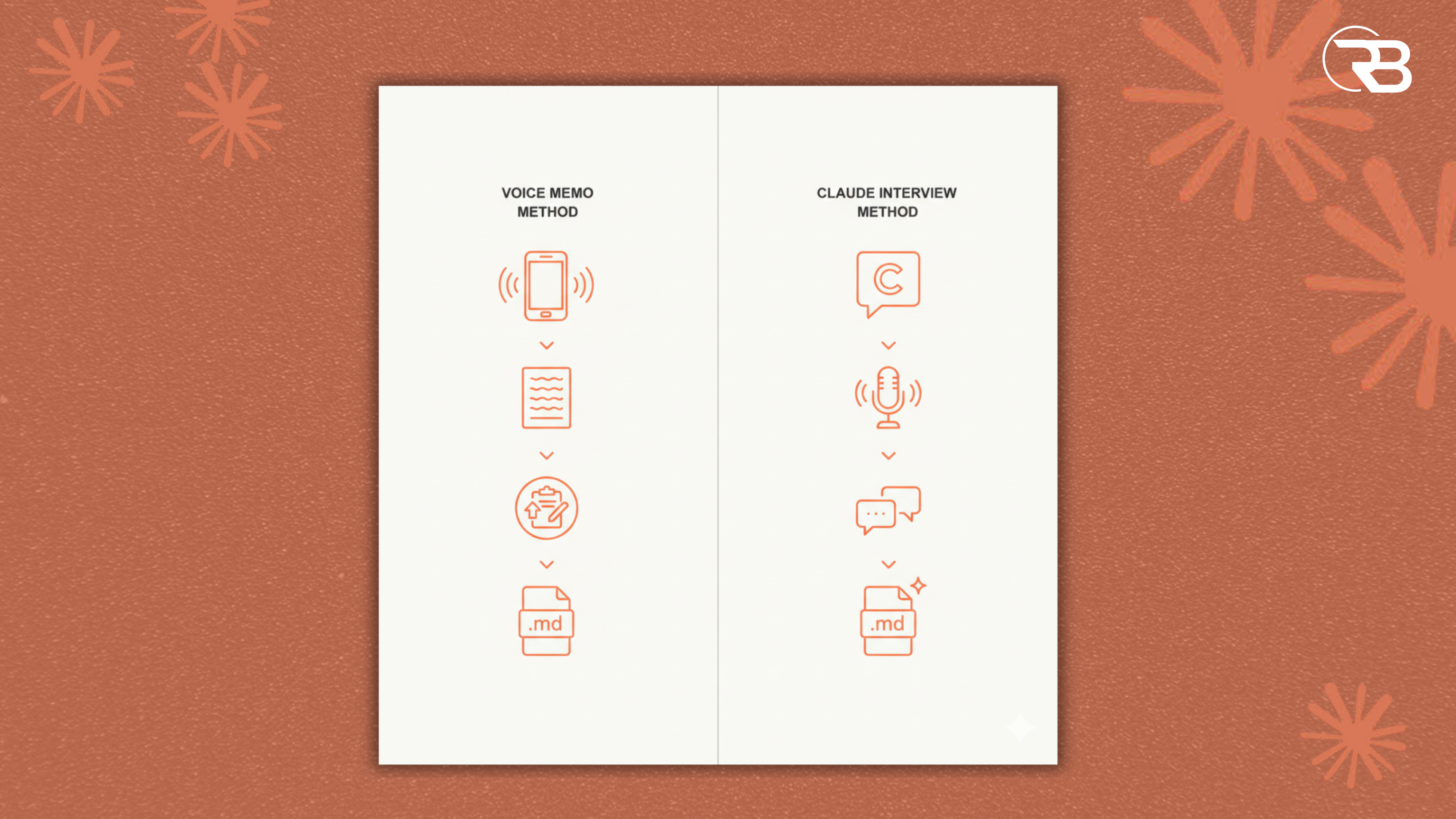
Option A: Voice memo for 15-20 minutes, then ask AI to organize it
Option B: Let Claude or ChatGPT interview you verbally (easier)
I recommend B. Having Claude ask questions is weirdly easier than monologuing at your phone. Plus, you can do it while you’re walking, folding laundry, driving…and give it SO MUCH more content when you’re brain dumping. This is the move, trust me.
Step 3: Build each file
Copy/paste the prompts I’m about to give you. Answer Claude’s questions. Save the file.
File #1: Your Values (The Foundation)
Why you need this: This is your foundation. Who you are, what you stand for, what you won’t compromise on. Your personal Constitution.
I rewrote mine three times. The first version was too formal, like I was writing my obituary. The second was too casual. The third...was probably still overthought, but it works….for now.
You don’t need perfection here. You need honest. (Which is harder, honestly.) This way, your “AI personal assistant” is actually “AI that knows your values and won’t suggest things that violate them.”
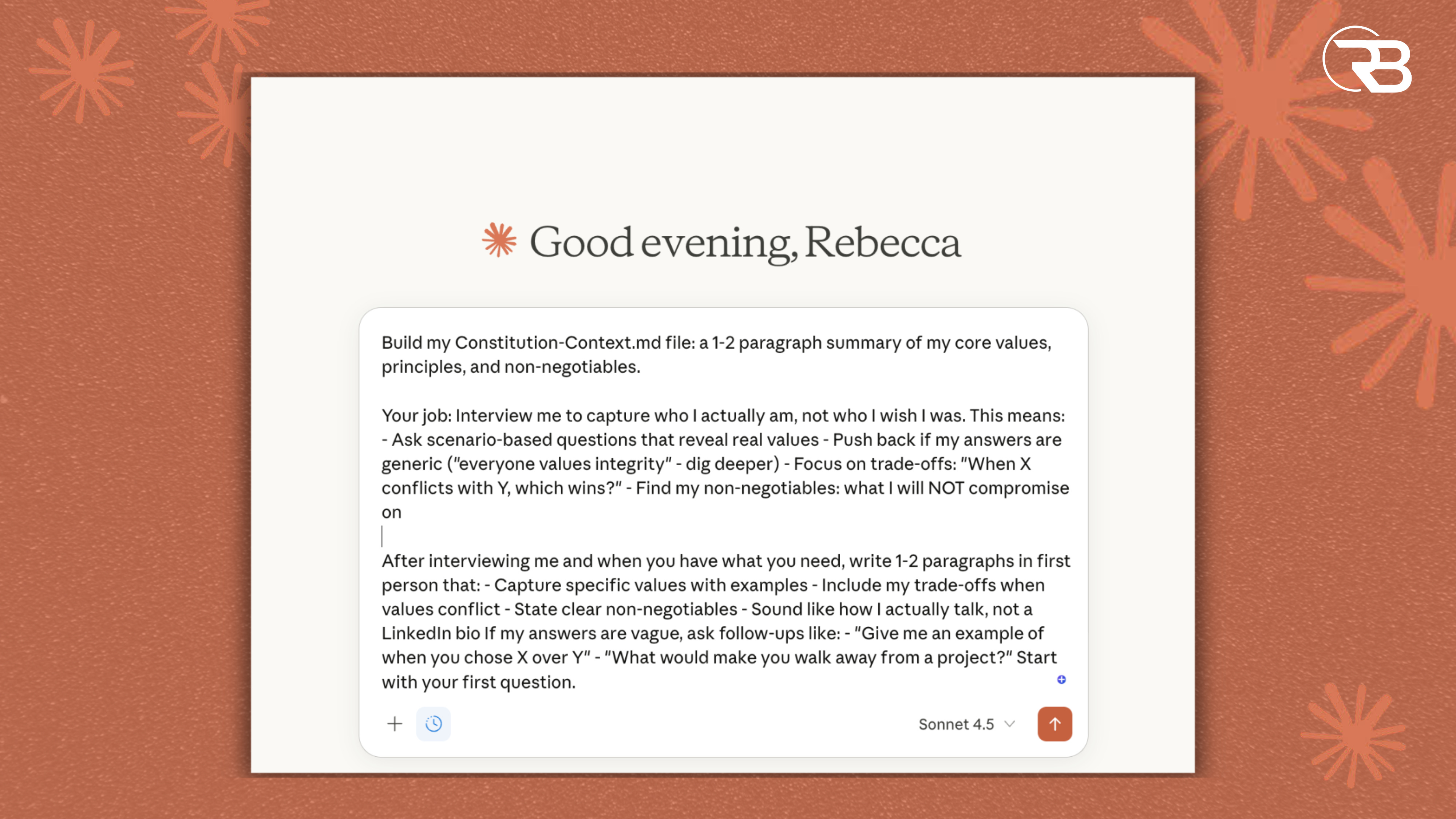
Copy and paste this prompt into Claude, ChatGPT, or any chatbot of your choice:
# Build Constitution-Context.md

Build my Constitution-Context.md file: a 1-2 paragraph summary of my core values, principles, and non-negotiables.

Interview me to capture who I actually am, not who I wish I was.

**Ask scenario-based questions that reveal real values:**
- "When X conflicts with Y, which wins?"
- "Give me an example of when you chose X over Y"
- "What would make you walk away from a project?"
- "When have you violated this value? What happened?"

**Push back if I'm generic:**
"I value integrity" → Everyone says that. What does integrity mean to you specifically?
"Family is important" → How does that show up in your decisions?
"I believe in excellence" → What do you sacrifice to get there?

**Good answers vs bad answers:**
GOOD: "I value intellectual honesty over being right. When efficiency conflicts with quality, quality wins. I won't compromise on treating people with dignity, even in disagreement."
BAD: "I believe in integrity, hard work, and excellence."

**After interviewing, write 1-2 paragraphs in first person that:**
- Capture specific values with examples
- Include trade-offs when values conflict
- State clear non-negotiables

Sound like how I actually talk, not a LinkedIn bio.

Start with your first question.
What you’ll end up with: A 1-2 paragraph file that captures your core identity. What you’ll get: Your actual values. Mine starts with “I value intellectual honesty over being right.” Took three rewrites to admit that.
How to save it properly:
After Claude creates your file, say: “Create this as a downloadable file called Constitution-Context.md”. Download it and save to Desktop/AI Context Files/
Done. Your first context file is built.
File #2: Your Work (The Time-Saver)
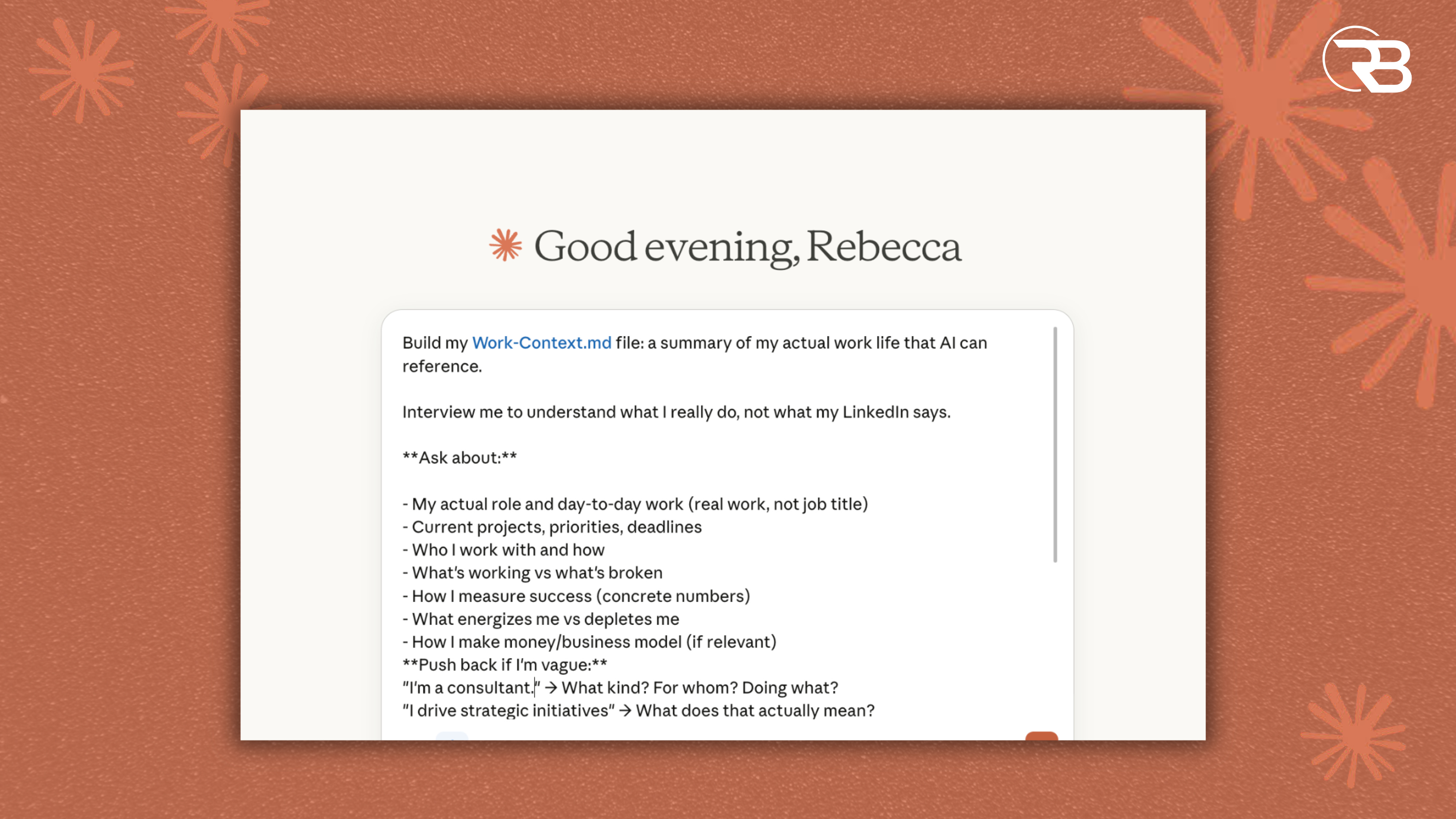
Why you need this: This is your biggest time-saver. Every time you ask AI for work help, it now knows: your role, your projects, how you work, and what you’re dealing with. No more “I’m a consultant who works with...” in every single conversation.
This is the file that saves you hours every week. This one’s easier because you know this stuff cold. You talk about your work all the time anyway.
The trick here is: don’t LinkedIn it. Don’t make it sound impressive. Make it accurate. AI doesn’t care if your title sounds fancy. It cares if it knows what you actually do all day.
Copy and paste this prompt:
# Build Work-Context.md

Build my Work-Context.md file: a summary of my actual work life that AI can reference.

Interview me to understand what I really do, not what my LinkedIn says.

**Ask about:**
- My actual role and day-to-day work (real work, not job title)
- Current projects, priorities, deadlines
- Who I work with and how
- What's working vs what's broken
- How I measure success (concrete numbers)
- What energizes me vs depletes me
- How I make money / business model (if relevant)

**Push back if I'm vague:**
"I'm a consultant" → What kind? For whom? Doing what?
"I drive strategic initiatives" → What does that actually mean?

**Good answers vs bad answers:**
GOOD: "I'm a freelance copywriter. 60% client work (B2B SaaS landing pages), 30% pitching, 10% admin. Trying to hit $8K/month by Q2. Currently at $5K."
BAD: "I'm a marketing professional who helps businesses grow."

**After interviewing, write 3-4 paragraphs in first person:**
1. Current state: role, day-to-day, structure
2. What's working / what's not
3. Goals and metrics (specific numbers/timelines)
4. Energy: what energizes vs depletes me

Sound like me explaining to a friend, not writing a resume.

Start with your first question.
Just answer honestly. Brain dump everything. This is for you, not your LinkedIn profile.
What you’ll end up with: A comprehensive file about your work life. Mine includes my consulting focus, client types, current projects, communication preferences, and the fact that I’m energized by strategic work and depleted by administrative tasks.
How to save it: Same process as before. Ask Claude to create the downloadable file, save to Desktop/AI Context Files/
Two files down. You’re already 40% done.
File #3: Your Goals
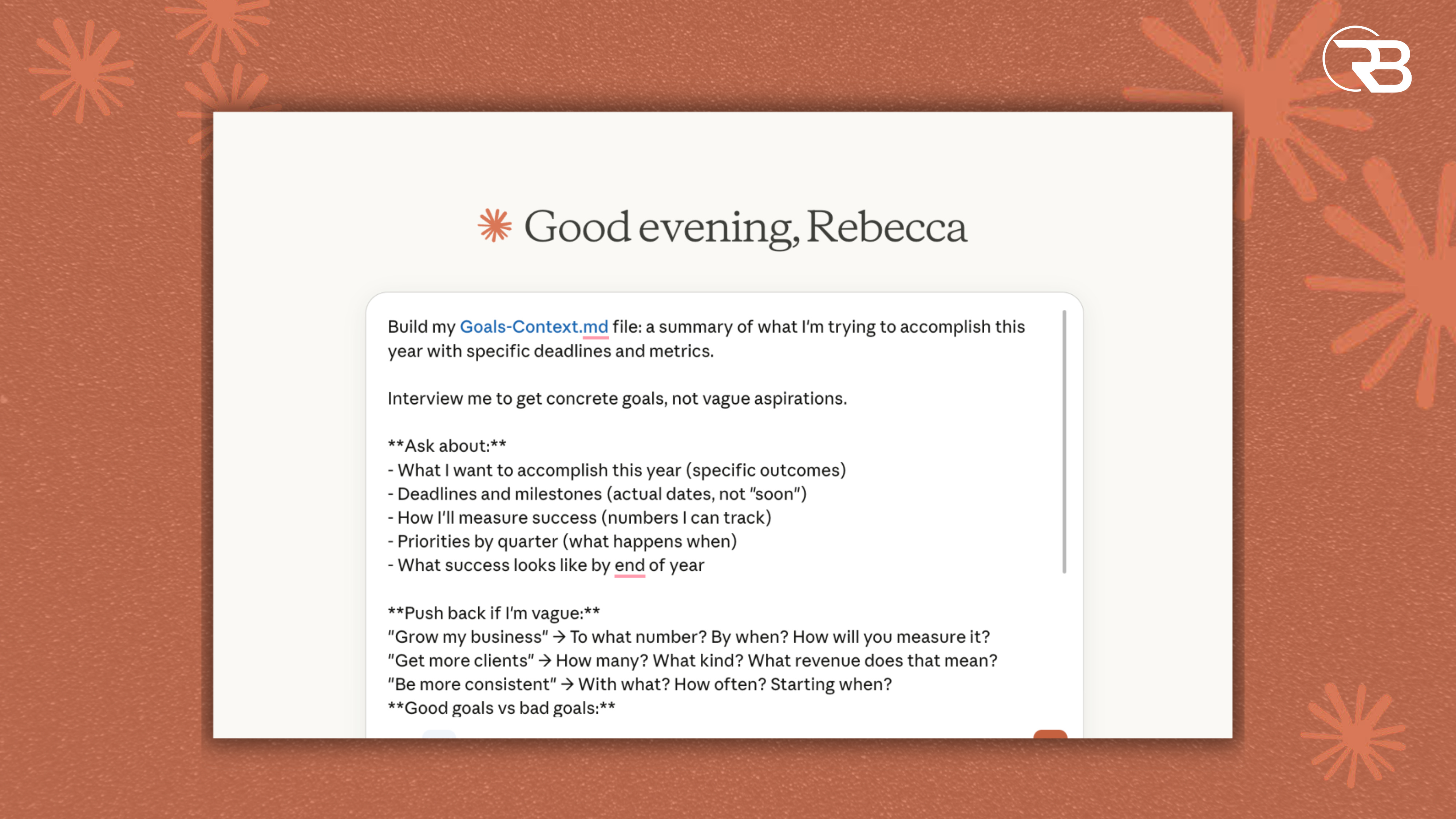
Why you need this: Now, AI knows who you are and what you do. Give it direction. Where are you going? What are you building toward? This makes every AI suggestion align with your actual goals instead of generic advice.
Copy and paste this prompt:
# Build Goals-Context.md

Build my Goals-Context.md file: a summary of what I'm trying to accomplish this year with specific deadlines and metrics.

Interview me to get concrete goals, not vague aspirations.

**Ask about:**
- What I want to accomplish this year (specific outcomes)
- Deadlines and milestones (actual dates, not "soon")
- How I'll measure success (numbers I can track)
- Priorities by quarter (what happens when)
- What success looks like by end of year

**Push back if I'm vague:**
"Grow my business" → To what number? By when? How will you measure it?
"Get more clients" → How many? What kind? What revenue does that mean?
"Be more consistent" → With what? How often? Starting when?

**Good goals vs bad goals:**
GOOD: "Hit 500 newsletter subscribers by June 30. Launch paid tier ($7/month) by September. Revenue goal: $1,000/month by December."
BAD: "Grow my audience and monetize my content."

**After interviewing, write 2-3 paragraphs covering:**
- Q1-Q2 goals with specific numbers and deadlines
- Q3-Q4 goals with specific numbers and deadlines
- How I'll measure progress (what metrics matter)

Be specific with dates and numbers. Vague goals get vague AI suggestions.

Start with your first question.
I know. Writing down concrete numbers with deadlines feels uncomfortably real. Do it anyway. Vague goals get vague AI suggestions. Specific goals get suggestions that actually move things forward.
What you’ll end up with: Concrete goals with deadlines. Mine includes subscriber targets, revenue goals, content milestones, and personal projects with actual dates.
How to save it: Same process → Save to Desktop/AI Context Files/
Quick tip: Set a reminder for January each year to rebuild this file. It’s the only one that expires.
Take a Break (If You Need One)
You’ve built the three most important files. The next two round out the picture and take less than 45 minutes total.
File #4: Your Life (The Reality Check)
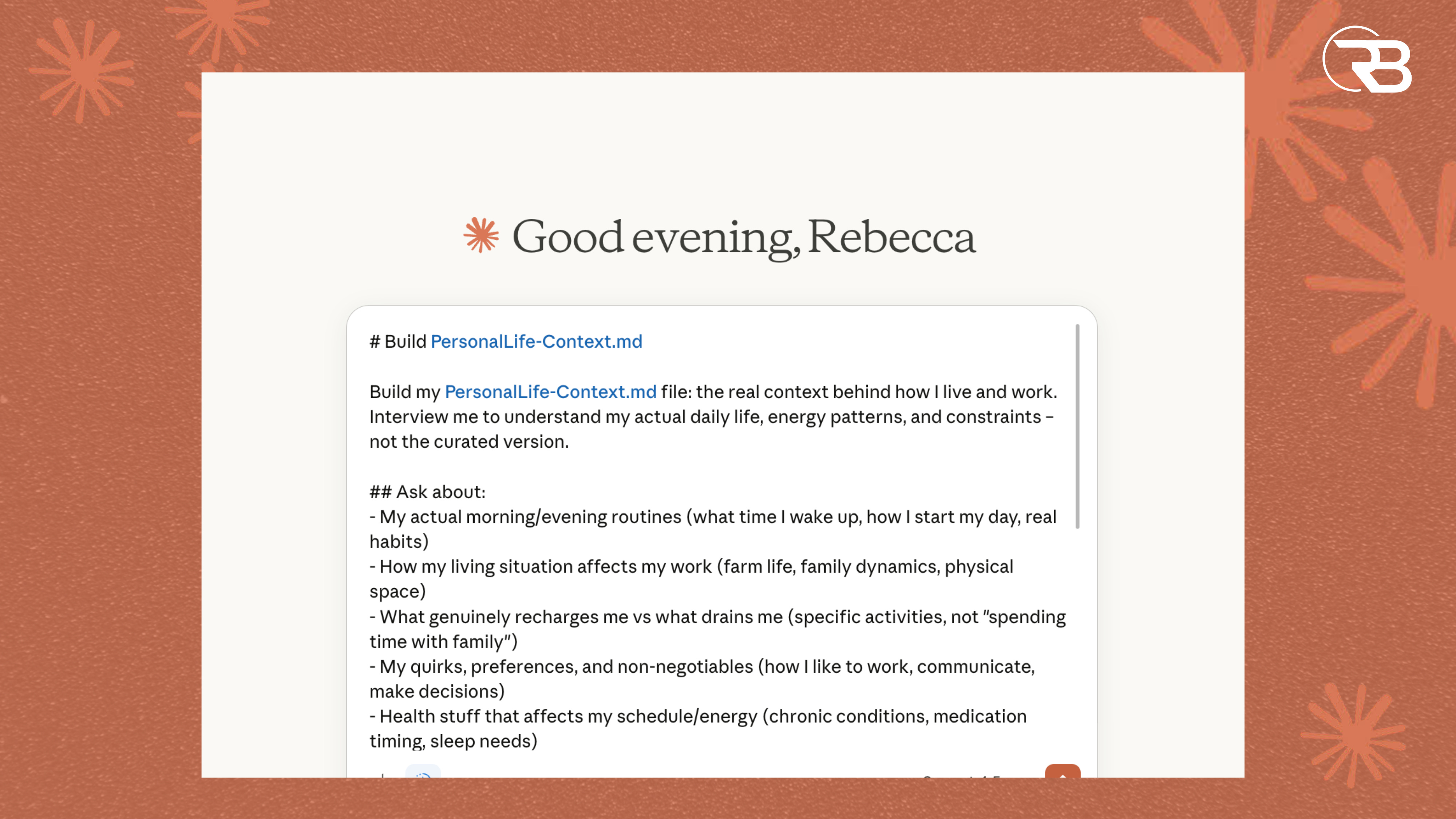
Why you need this: This makes AI suggestions actually fit your life. Without it, AI might suggest “wake up at 5 AM for deep work” when you’re a night owl with kids. With it, AI knows your constraints and preferences.
Copy and paste this prompt:
# Build PersonalLife-Context.md

Build my PersonalLife-Context.md file: the real context behind how I live and work.

Interview me to understand my actual daily life, energy patterns, and constraints – not the curated version.

## Ask about:
- My actual morning/evening routines (what time I wake up, how I start my day, real habits)
- How my living situation affects my work (farm life, family dynamics, physical space)
- What genuinely recharges me vs what drains me (specific activities, not "spending time with family")
- My quirks, preferences, and non-negotiables (how I like to work, communicate, make decisions)
- Health stuff that affects my schedule/energy (chronic conditions, medication timing, sleep needs)
- The gap between how I *want* to live and how I *actually* live right now

## Push back if I'm vague:
- "I'm a morning person" → What time do you actually wake up? What do you do first?
- "I need downtime" → What does that look like? Reading? Staring at a wall? Walking?
- "Family is important" → How does that show up in your schedule? What do you protect?

## Good answers vs bad answers:

**GOOD:** "I wake at 5:30am, make coffee, sit in silence for 20 minutes before anyone else is up. That's sacred. If I lose that, the whole day feels off. I'm dead by 8pm."

**BAD:** "I value work-life balance and prioritize self-care."

## After interviewing, write 3-4 paragraphs in first person:
1. Daily rhythms: when I have energy, how my day actually flows, constraints
2. What fills vs depletes me (specific, concrete)
3. Living situation and how it shapes my work
4. The gap between ideal and reality (what I'm trying to shift)

Sound like me telling a close friend how life actually works, not a wellness blog post.

**Start with your first question.**
Trust me when I tell you to include the weird stuff. You hate video calls. You need coffee before thinking. You’re useless after 8 PM. You’re an Enneagram 3 or an introvert. Put in the stuff that feels too specific to matter.
“I need coffee before I can process anything complicated” seems silly to write down until AI stops suggesting 7 AM strategy sessions. “I’m useless after 8 PM” seems obvious until AI stops giving you evening productivity advice that’ll never happen.
The quirks are the whole point. Generic advice doesn’t help. AI that knows you’re a night owl who hates phone calls and needs external structure? That helps.
What you’ll end up with: Your actual life constraints and preferences. Mine mentions I’m a morning person, I recharge alone, I hate meetings before 10 AM, and I have ADHD so I need external structure.
How to save it: Same process → Save to Desktop/AI Context Files/
File #5: Your Clients (If Relevant)
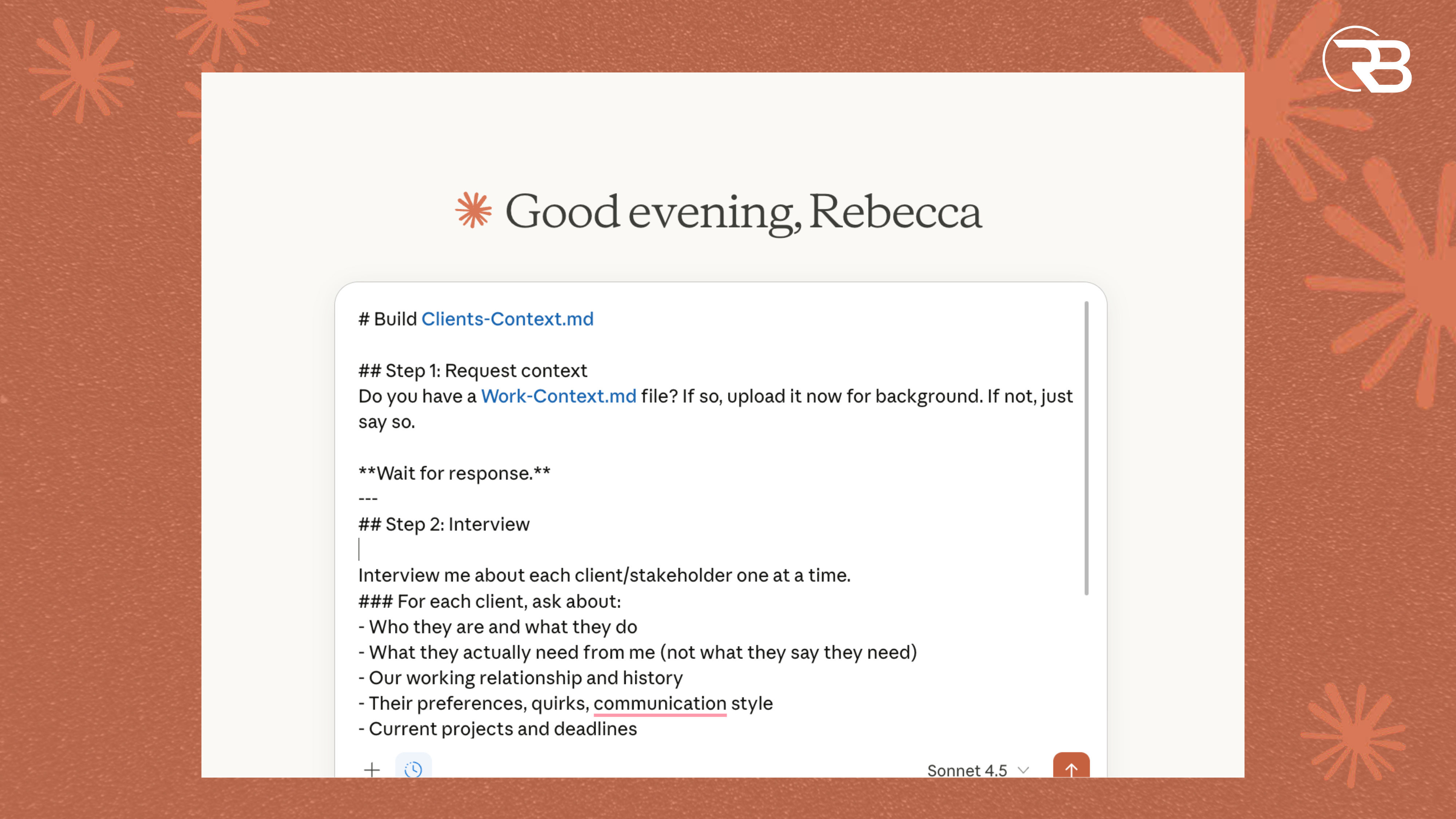
Why you need this (if you have clients/stakeholders): Stop re-explaining client context every time you need help with their work. AI now knows: their goals, preferences, what they care about, and what they don’t.
Obviously, skip this if: You don’t have external clients or key stakeholders. Not everyone needs this file. And you can use code names etc. to protect privacy if you want.
Copy and paste this prompt:
# Build Clients-Context.md

## Step 1: Request context

Do you have a Work-Context.md file? If so, upload it now for background. If not, just say so.

**Wait for response.**

---

## Step 2: Interview

Interview me about each client/stakeholder one at a time.

### For each client, ask about:
- Who they are and what they do
- What they actually need from me (not what they say they need)
- Our working relationship and history
- Their preferences, quirks, communication style
- Current projects and deadlines
- Their pain points and what keeps them up at night
- Red flags or things to avoid
- What success looks like to them

### Push back on vague answers:
"They want strategy help" → What does that actually mean? What are they trying to fix?

"They're great to work with" → How do they communicate? What do they hate? What makes them difficult?

### Output format:
One section per client with concrete details, written so I can reference it before calls.

---
After receiving Work-Context (or confirmation they don’t have one), start with: “Tell me about your first client.”
What you’ll end up with: A quick reference for each client. Mine includes communication preferences, project status, pain points, and what success looks like for them.
How to save it: Same process → Save to Desktop/AI Context Files/
Your Complete Folder Structure
Now your desktop should look like this:
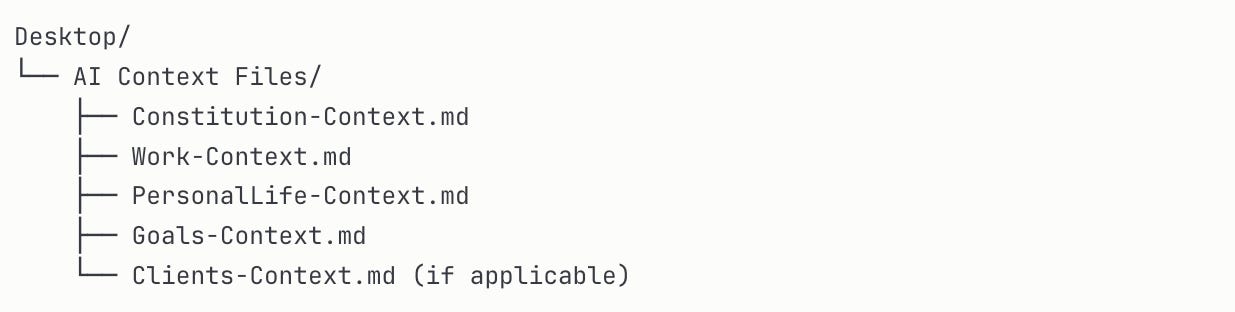
You just built your context vault. Now let’s use it.
How to Use Your Context Files
Lots of methods, pick what fits your workflow:
Upload when you start a conversation with any AI
Open Claude/ChatGPT/Gemini/Grok - your chatbot of choice
Click the paperclip icon
Upload the relevant files (drag and drop works)
Say: “I’ve uploaded my context files. Read them, then help me with [task]”
Add to Projects
Create a new Project in Claude of ChatGPT
Add your context files to Project Knowledge once
Every conversation in that project automatically knows your context
Use as regular reference files for Claude Code
Claude Code will reference these regularly without you having to drag and drop - ever!
Maintenance (Don’t Overthink This)
These are living documents, not monuments. Good enough is perfect.
I say this as someone who spent 45 minutes agonizing over whether to include “I hate small talk” in my PersonalLife file. I did. It’s in there.
Update them when things change. Don’t update them because you thought of a better word. That way lies madness.
What to update:
New projects in Work-Context.md
Changed circumstances in PersonalLife-Context.md
Progress on goals (or new goals)
New clients in Clients-Context.md
What NOT to do:
Obsess over perfect wording
Update every week
Rebuild from scratch constantly
The Part We Really Need to Talk About
This won't be for everyone. Some people will read this and think "absolutely not."
That's fair.
I built these files three months ago. I use them every day. My AI interactions went from "pretty good" to "uncomfortably accurate."
But I'm not going to tell you this is totally fine and you shouldn't think about the implications. You're creating psychological profiles of yourself for corporate AI. You're externalizing your working memory to tools you don't control. All of that is true. It also works really well. Both things can be true. We're doing it anyway. With our eyes open.
This is yes, but also no part.
There are ways to build totally private AI systems that live on your computer, but if you’re reading this article, you’re probably pretty new to all of this. We will start here for now.
Now Build Everything Else
You asked where to start with Claude Code. This is where.
Five files. Ground zero. The foundation everyone’s skipping.
Now you can actually use Claude Code the way it’s meant to work. Now AI stops asking you the same questions every session. Now suggestions actually fit your work instead of generic advice that sounds helpful but goes nowhere.
So here’s what you do:
Build the files. Use them for a week. See what changes. Then decide for yourself if the usefulness outweighs the weirdness. Then build them out. Maybe add files about your health goals. Build context files about your hobbies and how you spend your free time. Create context files slowly for other aspects of your life. These will always come in handy.
From this foundation, you will build everything else. Claude Code projects that can run your business (now that it knows about your business). Autonomous workflows. Whatever comes next. You’re ready now.
You can do this. Just start here. And have some fun!
Ohh Rebecca...I would have given a hug for you this...this has given me a direction,which I am struck with for using claude code...
This is all good…but if you can just “knock out” (in a few hours) 5 documents that contain everything that you are, everything that makes you unique, everything you value, etc…I would gently suggest that you’ve failed. Or you really don’t care about AI “becoming you.” I don’t say this critically—I agree capturing this about yourself is definitely the foundational step. But there is no shortcut to doing it. Sure, you can try it in a morning or afternoon, but you’ll fail…and the AI will still produce all sorts of things that aren’t you. So do yourself a favor, and work on this for…maybe a few WEEKS. (Not hours.)